 Semiahmoo Siding
 Roofing Built for Blaine Harbor's Salt Air and Wet Winters
Blaine Harbor sits close enough to the water that salt air is a daily fact of life, not an occasional nuisance. Add Whatcom County's driving winter rain and a moss season that can stretch from October well into spring, and a roof here works harder than one twenty miles inland. Asphalt shingle roofing can hold up very well against all of that, but only when the materials, ventilation, and installation details are matched to this specific environment. A shingle roof that would be perfectly adequate in a dry climate can underperform badly here if it's installed the same way.
This page covers what asphalt shingle roofing actually needs to succeed in Blaine Harbor, what a correct installation or repair involves, and how our process is built around the realities of this harbor-side neighborhood.
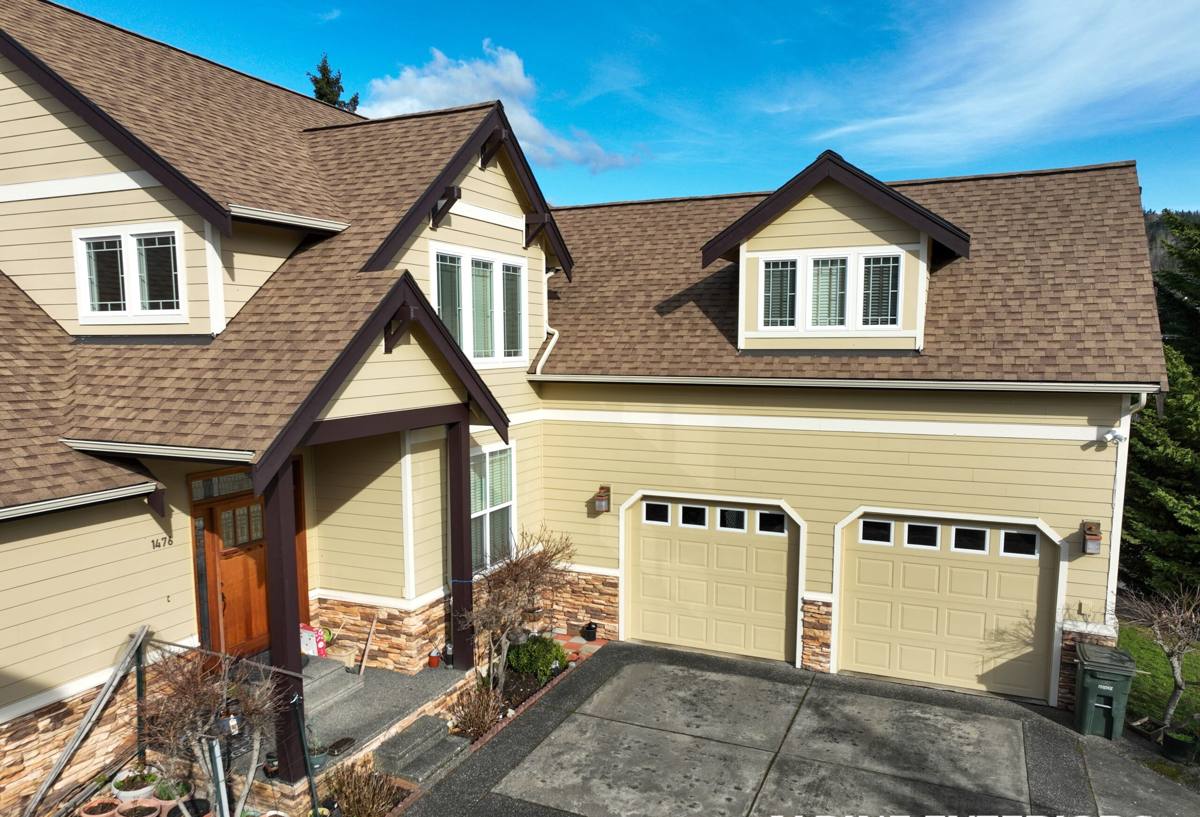
Why Blaine Harbor Roofs Age Differently
Salt Air and Metal Fatigue
Salt-laden air accelerates corrosion on anything metal — flashing, fasteners, vent boots, and drip edge. A roof that uses standard-grade metal components in a coastal setting like Blaine Harbor will show rust and premature failure at those points years before the shingles themselves wear out. This is one of the most common causes of hidden leaks we find on harbor-area homes: the shingles look fine, but the flashing underneath has quietly corroded.
Moss, Shade, and Moisture Retention
Whatcom County's long, mild, wet season is close to ideal growing conditions for moss. Roof slopes that get shade from mature trees or face away from the sun hold moisture longer, and moss doesn't just sit on top of shingles — it lifts the edges, holds water against the granule surface, and works its way toward the nail line over time. Left unaddressed for a few seasons, moss growth can shorten a shingle roof's usable life significantly.
Wind-Driven Rain
Storms coming off the water don't just rain down, they push rain sideways and up under shingle edges and around penetrations. This makes underlayment quality and flashing detail work more important here than in areas with calmer weather patterns — a roof that's merely "watertight from above" isn't enough.
What a Correct Installation Looks Like in This Climate
A shingle roof is a system, not a single product. In a coastal, moss-prone area like Blaine Harbor, every layer of that system needs to be chosen with the local climate in mind.
- Underlayment: A synthetic, water-resistant underlayment across the full deck, with self-adhering membrane at eaves, valleys, and other vulnerable areas where wind-driven rain is most likely to intrude.
- Flashing: Corrosion-resistant metal at all roof-to-wall transitions, chimneys, skylights, and vent penetrations — the details that fail first in salt air.
- Fasteners: Properly rated, corrosion-resistant nails set correctly, not overdriven or underdriven, since improperly set fasteners are a common source of early shingle failure.
- Ventilation: Balanced intake and exhaust airflow through the attic so moisture doesn't get trapped against the underside of the roof deck, which contributes to premature sheathing rot and shortens shingle life from below.
- Shingle selection: Algae-resistant shingles with granules formulated to resist the moss and moss-related staining common in this climate.
Skipping any one of these doesn't necessarily cause an immediate problem — but it shows up as a leak, a soft spot, or premature granule loss a few years down the road, usually right when it's most expensive to fix.
Signs a Blaine Harbor Roof Needs Attention
Because moss and salt air work slowly, many homeowners don't notice a problem until it's already inside the attic. Some early indicators worth checking for or having inspected:
- Moss visible along ridge lines, valleys, or shaded slopes
- Granules collecting in gutters or at downspout outlets
- Shingle edges that look curled, lifted, or cracked
- Rust streaking below metal flashing or vent boots
- Dark streaking or staining across the shingle field
- Any soft or spongy feel underfoot on roof decking (a sign of trapped moisture)
None of these mean the whole roof needs to be replaced. Often they point to a targeted repair — replacing flashing, treating and removing moss, or resealing a penetration — that can add years to a roof's remaining life if it's caught early.
Repair, or Full Replacement?
We don't default to recommending replacement just because a roof shows some wear. The right call depends on the roof's age, how widespread the damage is, and what's happening underneath the shingles.
| Situation | Typical Approach |
|---|---|
| Isolated moss growth, roof under 12-15 years old | Moss treatment and removal, spot repair of affected shingles |
| Rusted flashing or vent boots, shingles otherwise sound | Flashing and penetration repair, no full tear-off needed |
| Widespread granule loss, curling shingles, roof near or past rated lifespan | Full replacement, since patching a roof at end of life is a short-term fix |
| Soft decking or evidence of water intrusion into the attic | Deck inspection and repair as part of a larger reroof, since shingles alone won't solve a structural moisture problem |
Our Asphalt Shingle Roofing Process
Inspection First
We start with a full roof inspection — deck condition, flashing, ventilation, and the shingles themselves — before recommending anything. In a climate like Blaine Harbor's, the visible surface often doesn't tell the whole story, so we look at what's happening at the attic and deck level too.
Tear-Off and Deck Assessment
For a full replacement, we remove the existing roofing down to the deck and check the sheathing for soft spots or rot, which is common on older coastal roofs where moisture has been working its way in slowly. Any compromised decking gets replaced before new material goes down — installing new shingles over a damaged deck just hides the problem.
System Installation
We install the full underlayment, flashing, and ventilation system described above, matched to the specific exposure of your roof — a shaded, moss-prone north slope gets treated differently than a sun-exposed south slope facing the harbor.
Final Walkthrough
We walk the finished roof and the site with you, confirm cleanup, and go over what maintenance (if any) will keep the roof performing as expected in this climate.
Shingle Options for Coastal, Moss-Prone Roofs
Not every asphalt shingle product performs the same way in a salt-air, high-moisture environment. Here's how the general categories compare for a home in Blaine Harbor:
| Shingle Type | Coastal/Moss Performance | Best Fit For |
|---|---|---|
| Standard 3-tab | Basic algae resistance, shorter rated lifespan | Budget-focused projects, secondary structures |
| Architectural (laminate) | Better wind resistance, thicker profile sheds water more effectively | Most Blaine Harbor homes; our most common recommendation |
| Algae-resistant (AR) architectural | Copper- or zinc-infused granules resist moss and algae staining | Shaded lots, north-facing slopes, homes with a history of moss growth |
| Impact-rated / heavier profile | Added durability against wind-driven debris | More exposed sites closer to open water |
For most homes in this area, we lean toward algae-resistant architectural shingles — the upfront cost difference is modest, and it directly addresses the moss issue that's most likely to shorten a roof's life here.
Cost Factors for Blaine Harbor Roofing Projects
Every roof is different, but the main variables that affect cost on a project in this area are consistent:
| Factor | Why It Matters Here |
|---|---|
| Roof size and pitch | Steeper roofs take longer and require more safety setup |
| Number of penetrations and valleys | Each one needs flashing detail — more penetrations means more labor and material |
| Deck condition | Coastal moisture exposure sometimes means hidden deck repair is needed once tear-off begins |
| Shingle grade selected | Algae-resistant and heavier-profile shingles cost more than standard 3-tab but last longer in this climate |
| Access and staging | Harbor-area lots vary in how much room there is for material staging and disposal |
We give a written estimate after inspection, not a phone-quote guess — coastal roofs too often have deck or flashing surprises that a quick look from the ground can't catch.
Simple Maintenance That Extends Roof Life Here
A little regular attention goes a long way in this climate. Homeowners in Blaine Harbor get the most life out of a shingle roof by staying on top of a short list of basics:
- Keep gutters and downspouts clear so water doesn't back up under the eave line
- Have moss treated and gently removed before it spreads, rather than waiting until it's heavy
- Trim back tree limbs that shade the roof and keep it damp longer than necessary
- Check attic ventilation isn't blocked by insulation or debris
- Have flashing and penetrations inspected every few years, since that's where salt-air corrosion shows up first
Why a Local Crew Matters for This Job
Asphalt shingle roofing isn't exotic work, but doing it well in Blaine Harbor means understanding the specific way this harbor environment stresses a roof — where moss tends to establish itself, how far wind-driven rain can push under an edge, and how fast salt air corrodes an underspecified metal detail. A crew that regularly works this stretch of Whatcom County brings that judgment to every inspection and installation, rather than applying a generic approach and hoping it holds up. That local familiarity is often the difference between a roof that needs attention again in a few years and one that reaches its full rated lifespan.
If you're seeing moss, granule loss, or flashing issues on a Blaine Harbor roof — or just want an honest read on how many years a current roof has left — we're happy to take a look. Reach out for a free, no-pressure estimate using the form below.